



Key Takeaways
A 2026 guide to getting your brand cited and recommended when users ask Google Gemini, built on how Gemini actually grounds its answers.
- Gemini grounds most answers in Google Search, so your Gemini visibility is downstream of your Google Search visibility, not a separate game.
- Gemini attaches inline citations with a source URL and title to the claims it makes, so it favors pages it can quote cleanly and verify.
- Google’s Knowledge Graph is how Gemini resolves who you are, which makes entity signals as important as any single ranking page.
- The biggest mistake is treating Gemini optimization as unrelated to SEO, when the two share the same underlying index and quality signals.
- A focused plan on search rankings, entity clarity, and extractable content moves a brand from invisible to routinely cited in Gemini.
How to Optimize for Google Gemini in 2026
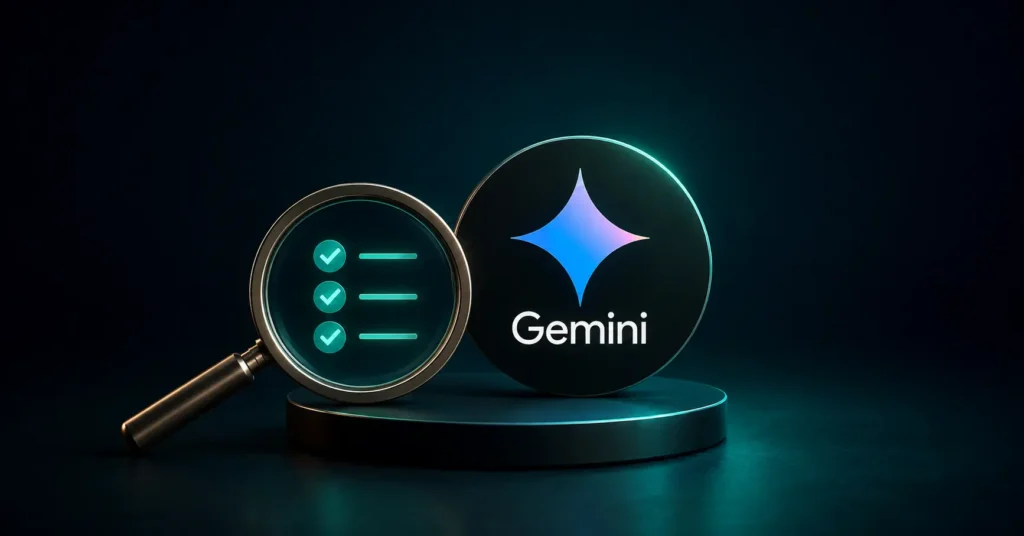
Learning how to optimize for Google Gemini starts with one fact most guides miss: Gemini does not run its own separate web crawler the way some assistants do. It grounds its answers in Google Search and Google’s Knowledge Graph.
That means the work you do to rank and to be recognized as an entity is the same work that gets you cited inside a Gemini answer.
This guide is for marketers, founders, and SEO teams in the United States who keep watching Gemini recommend competitors and want to understand the mechanism behind it.
The short version: Gemini decides whether a question needs a search, runs Google searches, synthesizes the results, and attaches citations to specific sources. If you are strong in Google Search and clear as an entity, you are already most of the way there.
Our team at Intelitune treats Gemini optimization and search optimization as one connected system. According to Pew Research Center data, people click far fewer traditional links once an AI summary appears, which is exactly why being the cited source now matters more than the raw ranking.
What Does It Take to Get Recommended by Google Gemini?
It takes two things: appearing in the Google Search results Gemini grounds against, and being clear and quotable enough that Gemini attaches a citation to you. Gemini recommends what it can find in Google and confidently attribute. Miss either half and you stay out of the answer.
The first requirement is classic search strength, because Gemini’s grounding pulls from the same index that powers Google Search. The second is structure and clarity, since Gemini has to lift a specific passage and cite it with a source URL.
This is the heart of answer engine optimization, and it is why thin pages that technically rank still fail to earn a mention. SparkToro zero-click research shows fewer than a third of searches now end in a click, so the citation itself, not the click, is increasingly the prize worth chasing.
Quick verdict: Gemini recommends what Google can surface and what Gemini can quote. Earn real Google Search visibility, make your entity unambiguous in the Knowledge Graph, and write passages Gemini can lift in a sentence. Skip any one of those and you stay absent from the answer.
How Google Gemini Actually Finds and Cites Sources
Gemini finds sources through a feature called grounding with Google Search, and it cites them with inline annotations tied to specific claims. Understanding this flow is the whole of effective Gemini SEO, because it tells you exactly what to optimize.
Per Google’s own Gemini Google Search grounding documentation, the process runs in a clear sequence. Gemini analyzes whether a search would improve the answer, generates and runs Google search queries, synthesizes the results, and returns a response with inline citations.
Each citation carries a source URL and title plus the exact text segment it supports. Gemini also surfaces Google Search Suggestions alongside grounded answers. In practice, that means your page has to both show up in those searches and offer a clean passage worth quoting.
There is a subtle implication here that most teams miss. Because Gemini generates its own search queries rather than using the user’s exact words, you are not optimizing for a single keyword; you are optimizing to appear across the cluster of related queries Gemini might run for a topic.
A page that answers one narrow phrasing but ignores the surrounding questions gets grounded less often than a page that covers the topic completely. Breadth of coverage, not just a single target term, is what keeps you in the grounding pool.
Does Gemini Decide When to Search on Its Own?
Yes, Gemini evaluates each request and searches only when live information would help, answering stable questions from its own knowledge. That decision shapes your strategy. For fast-moving or specific queries, like current comparisons or recent data, Gemini is far more likely to run a live Google search, which rewards fresh, well-structured pages.
For broad, stable topics it may answer from training memory, which rewards long-term authority and consistent mention across the web. Knowing which mode your buyers trigger tells you where to spend first. A “best options for” or pricing-style query almost always triggers a live search, so recency and structure win those moments.
The Grounding Layer Decides What Gemini Will Repeat
Gemini attaches its citations to exact passages, not vague paraphrases, so it needs a clean, quotable line to point at. When your key fact sits inside a long, hedged paragraph, there is no tidy segment to annotate, and Gemini cites the competitor who wrote a crisp, standalone sentence instead.
Write each important answer as a discrete statement. A claim like “Setup takes about five business days for most accounts” is quotable and easy to ground. A claim buried in three clauses of preamble is not, and it quietly costs you the citation.
Why Google Search Visibility Still Decides Gemini Visibility
Your Gemini visibility rises and falls with your Google Search visibility, because grounding pulls from Google’s index. A page Google cannot find, crawl, or trust is a page Gemini cannot ground against, no matter how good the copy is. This is the single biggest reason SEO and Gemini optimization cannot be separated.
That makes technical and content fundamentals non-negotiable. Google’s Google Search Central guidance rewards demonstrated experience, expertise, and trust, and those same signals influence which sources Gemini feels safe citing.
So the investment compounds: strong search content earns rankings, and those rankings feed the grounding layer that Gemini uses to build answers. Neglect the search foundation and every downstream AI channel weakens with it.
This is also why chasing Gemini with tricks rarely works. There is no separate back door into Gemini that bypasses Google, because the grounding step is Google Search under the hood.
Site speed, mobile usability, clean indexation, and internal linking all still matter, not because Gemini reads a checklist, but because they determine whether your best pages surface in the searches Gemini runs. The unglamorous technical work you may have deprioritized is now doing double duty, feeding both your rankings and your AI citations at once.
Build the Entity and Knowledge Graph Signals Gemini Trusts
Entity signals tell Gemini who you are, what you do, and which category you belong in, independent of any single page. Google’s Knowledge Graph is the structured memory Gemini leans on to resolve that identity, which makes entity work as important as ranking work. This is the backbone of generative engine optimization.
Start with consistency, because a model that sees three different descriptions of your company hedges on all of them. Your brand name, founders, products, and category descriptors should read identically across your site, your profiles, and third-party mentions. Add Schema.org structured data with Organization markup and a complete sameAs list, so machines can connect your website to the rest of your verified footprint.
Align Your Google Knowledge Graph Entity
A clean, connected entity record gives Gemini a stable reference point it can trust when it decides who belongs in an answer. Feeding Google clear, consistent signals helps it build an accurate entry in the Google Knowledge Graph API, which is what lets Gemini place you confidently inside the right category rather than guessing.
Align your structured data, your public profiles, and any knowledge panel so every source tells one coherent story. When the open web agrees about your brand, Gemini repeats that agreement in its answers, and when sources conflict, it hedges or leaves you out entirely.
Want to see where Gemini, ChatGPT, and Claude place your brand right now? Run a free AI visibility diagnostic and benchmark against your competitors.
Structure Content So Gemini Can Extract It
Structure is what turns a ranking page into a cited one. Lead every important section with the direct answer, then support it, rather than building toward a conclusion the reader and the model both have to wait for. Gemini rewards pages that make the answer obvious.
Use plain, factual sentences near the top of each section, and put numbers, dates, and named specifics in their own clauses so they are easy to lift. Break dense blocks into short paragraphs and use descriptive headings that mirror how people phrase questions. A page that answers a clear question in one clean sentence under a matching heading gets grounded far more often than one that hides the answer deep in the copy.
Structured data quietly amplifies all of this. Marking up FAQs, how-to steps, articles, and your organization gives Google machine-readable context about what each passage means, which makes it easier to match your content to the right query and to extract it cleanly.
Think of it as labeling your content for the grounding system. The pages that consistently get cited tend to pair a clean, answer-first writing style with accurate schema, so the model both understands the passage and trusts where it came from.
How Is Optimizing for Gemini Different from ChatGPT and Perplexity?
The core difference is the source of truth: Gemini grounds in Google Search and the Knowledge Graph, while other assistants use their own retrieval stacks. That makes Google Search strength unusually decisive for Gemini compared with, say, ChatGPT SEO, where the retrieval index and ranking signals differ.
The fundamentals still travel across platforms. Clean entities, quotable structure, and demonstrated expertise help you everywhere, including Claude SEO. The tuning is what changes.
For Gemini, doubling down on Google rankings and Knowledge Graph accuracy pays off more directly than it does elsewhere, so weight your effort toward search and entity work when Gemini is the target.
Common Mistakes That Keep Gemini From Citing You
The most common mistake is treating Gemini optimization as separate from SEO, then wondering why a page that ranks never gets cited. Ranking earns you eligibility to be grounded; a clean, quotable answer earns the actual citation. Fix the answer, not just the position.
Other frequent errors compound the damage. Brands publish inconsistent names and descriptions that confuse entity resolution, bury key facts inside long paragraphs, skip structured data, and forget to date time-sensitive pages that Gemini prefers fresh.
Many also neglect platform-specific work like Perplexity SEO and assume one approach fits every assistant. Each gap quietly hands the recommendation to a competitor who made the model’s job easier and safer.
A quieter mistake is measuring the wrong thing. Teams watch rankings and sessions but never check whether Gemini actually names them, so they optimize blind and miss the gap between “we rank” and “we get cited.”
Another is writing for the algorithm instead of the reader, producing padded pages that surface in search but give Gemini nothing crisp to quote. The fix for both is the same: check your real AI visibility, then write the clearest possible answer to the questions your buyers ask.
Your 2026 Google Gemini Optimization Checklist
Start with search fundamentals, because Gemini cannot ground against what Google cannot surface. Fix crawlability and indexing, earn rankings for the queries your buyers actually ask, and make sure your most important pages are genuinely discoverable. This is the base everything else sits on.
Next, tighten your entity signals: unify your naming, ship Organization schema with a full sameAs list, and correct your Knowledge Graph and knowledge panel. Then rebuild your highest-intent pages around quotable answers, leading each section with a direct, factual statement and dating anything time-sensitive.
Track outcomes the way we do in our case studies, and prioritize the query types your buyers use, which vary widely across the industries we serve. Ninety days of steady work on search, entity, and extractable content is what moves a brand from absent to routinely cited.
The brands Gemini recommends in 2026 are the ones Google already trusts and can quote without hesitation. Win the search visibility, make your identity unambiguous, and give Gemini a clean line worth grounding. Do that consistently, review your results every quarter, and you stop chasing the recommendation and start earning it by default.
Frequently Asked Questions
Does optimizing for Google Gemini require doing SEO?
Yes. Gemini grounds most answers in Google Search, so your Gemini visibility depends on your Google Search visibility. A page Google cannot find or trust cannot be grounded or cited. Strong SEO, clear entity signals, and quotable content are the foundation, and the same work that earns rankings also earns Gemini citations.
How does Gemini choose which sources to cite?
Gemini analyzes whether a question needs live information, runs Google searches, synthesizes the results, and attaches inline citations to specific claims, each carrying a source URL and title. It favors pages it can quote cleanly and verify. Clear, factual passages near the top of a well-structured page are far easier for Gemini to cite than buried claims.
Is Gemini optimization different from optimizing for ChatGPT?
Yes, in emphasis. Gemini grounds in Google Search and the Knowledge Graph, so Google rankings and entity accuracy matter unusually much. ChatGPT and Perplexity use their own retrieval systems. The shared fundamentals of entity clarity and quotable structure carry across all of them, but for Gemini you should weight effort toward search visibility and Knowledge Graph accuracy.
How long does it take to get cited by Gemini?
Expect meaningful movement within roughly 90 days of focused work. Entity fixes like schema and Knowledge Graph alignment resolve fairly quickly, while ranking gains that feed Gemini’s grounding take longer to compound. Pages rebuilt around clean, quotable answers can start earning citations within weeks once they surface in the relevant Google searches.
Can I optimize for Gemini and Google Search at the same time?
Yes, and you should. Because Gemini grounds in Google Search, the two goals reinforce each other rather than compete. Improving rankings, structured data, and content clarity lifts both your traditional search visibility and your odds of being cited inside a Gemini answer. For Gemini, search optimization and answer optimization are effectively the same project.
Resources & Further Reading
The following authoritative sources were used to inform and validate this article:
- Gemini API Grounding with Google Search – Google’s official spec for how Gemini searches, grounds, and cites sources
- Google Search Central – helpful content and EEAT guidance that governs Google rankings
- Google Knowledge Graph API – the structured entity database Gemini uses to resolve brand identity
- Schema.org – the structured data vocabulary that defines your brand and content as entities
- Pew Research Center – data on falling click rates when AI summaries appear in search results
- SparkToro – research on zero click search and the shrinking share of clicks to the open web

Arqam Bashir
Founder & Head of AI SEO
Arqam Bashir is the Founder & Head of AI SEO at Intelitune, helping brands grow visibility across ChatGPT, Google AI Overviews, Gemini, Perplexity, and Search through AI SEO, AEO, GEO, technical SEO, and entity optimization.
- Previous
- Next
- Real client results
What you can expect to gain
- AI Visibility Diagnostic