





Key Takeaways
Nine affordable AI SEO tools for small business in 2026, with verified starting prices, what each does best, and how to choose without overspending.
- The cheapest useful start is keyword data from about $7 a month; full content and visibility tools run $20 to $100.
- No single tool covers everything: research, content optimization, and AI-visibility tracking are three different jobs.
- For tracking whether ChatGPT and AI Overviews cite you, dedicated monitors like Otterly.ai and Rankscale start near $20 to $29.
- The common mistake is buying an enterprise suite you will not use; a small stack of focused tools beats one bloated one.
- Tools help you do the work; if you lack the time to run them, a scoped service is often the better spend.
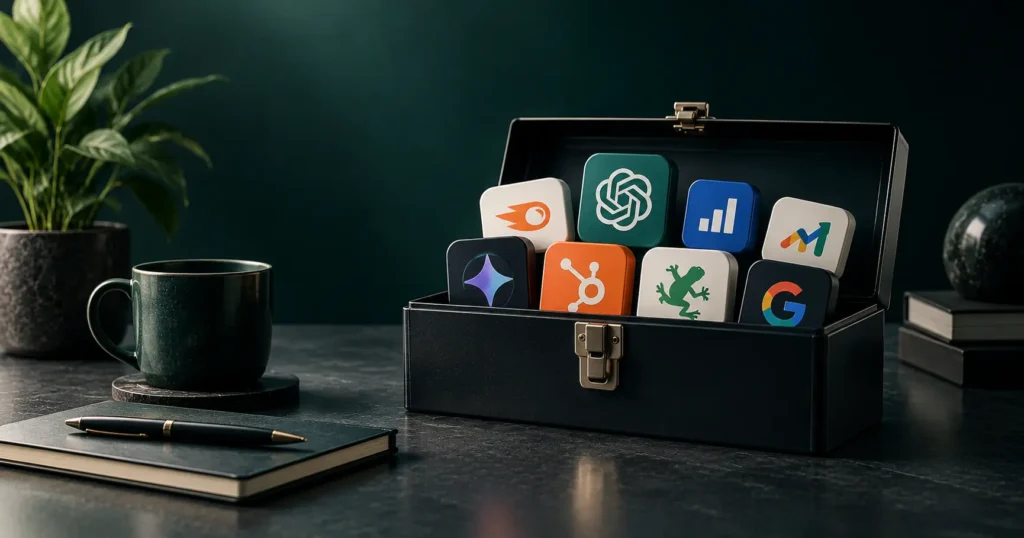
Small businesses do not need a $500-a-month enterprise suite to compete in AI search. They need a few focused, affordable tools that cover the three jobs that matter now: finding what people ask, creating content engines can cite, and checking whether AI actually mentions you.
This guide picks nine that deliver that without draining the budget. The urgency is real, because AI answers are quietly rerouting clicks away from small sites, a shift we unpack in whether AI is killing website traffic.
It is written for owners and lean marketing teams who want real options with real prices, not a vague list. Every price below is the tool’s cheapest paid tier as listed on its own official pricing page in early 2026, and because plans change often, confirm the current number before you buy.
If you are still getting oriented on the discipline itself, our explainer on what AI SEO is covers the fundamentals these tools support.
How Do These 9 Affordable AI SEO Tools Compare?
Here is the full lineup at a glance, sorted roughly from cheapest entry point up, so you can match a tool to your budget and the job you need done. The pressure to act is real, since the Gartner search forecast projects traditional search volume falling 25% by 2026 as buyers shift to AI.
| Tool | Best for | Starting price | Job |
| Keywords Everywhere | Cheap keyword data | from $84/year | Research |
| Mangools | Beginners | from $19.90/mo (annual) | All-in-one SEO |
| Rankscale | AI rank tracking | $20/mo | AI-visibility |
| NEURONwriter | Budget content optimizer | $23/mo | Content |
| Ubersuggest | Budget all-in-one | $29/mo | Research + SEO |
| Otterly.ai | AI-visibility monitoring | $29/mo | AI-visibility |
| Frase | Content briefs plus GEO | from $39/mo | Content + GEO |
| Writesonic | AI content plus visibility | from $79/mo | AI content platform |
| SE Ranking | Full platform | from about $82/mo (annual) | All-in-one + AI |
For a sense of how these tool costs compare to hiring help, our breakdown of how much AI SEO costs puts the DIY-versus-done-for-you math side by side.
Read the table by job, not by brand. The three jobs, research, content, and AI-visibility, rarely live in one affordable tool, so the price you see buys depth in one area rather than all three. A $20 tracker and a $23 optimizer together cost less than one mid-tier suite and cover two jobs properly, which is usually the smarter small-business buy.
The prices shown are entry tiers, and every tool has higher plans, so match the tier to your real monthly volume instead of defaulting to the cheapest or the most expensive option on the list.
Quick verdict: Start with the job, not the brand. If you need keyword data, Keywords Everywhere or Mangools is enough. If you need content engines will cite, NEURONwriter or Frase.
If you need to know whether ChatGPT and AI Overviews mention you, Otterly.ai or Rankscale. Most small businesses do well with two or three of these, not all nine, and definitely not a pricey enterprise suite they will barely touch.
What Are the 9 Best Affordable AI SEO Tools?
Each pick below includes what it does, its verified starting price, who it suits, and one honest limitation, so you can choose on fit rather than hype.
1. Keywords Everywhere: Cheapest Keyword Data
Keywords Everywhere is a browser add-on that shows search volume, competition, and related terms right inside Google and other sites you already use. Plans start from $84 a year, roughly $7 a month, on a credit model, which makes it the cheapest way to get real keyword data.
It is best for solo owners who want numbers without a full platform. The limitation is that it is a data layer, not a workflow: it will not optimize content or track AI answers, so it works best alongside another tool. For a local business validating a handful of service keywords, its pay-for-what-you-use credits can cost only a few dollars a year, which is about as low-risk as paid SEO tooling gets.
2. Mangools: Best for Beginners
Mangools bundles keyword research, rank tracking, backlinks, and a SERP analyzer into one of the friendliest interfaces in SEO, with an Entry plan from $19.90 a month billed annually. It has also added an AI Search Watcher for tracking AI results. It is best for beginners who find bigger platforms overwhelming.
The limitation is depth: its databases are smaller than enterprise tools, which rarely matters for a local or niche small business but can for competitive national terms. If you have never used an SEO platform before, Mangools is the one most people get productive in on day one, which is worth a lot when time is your scarcest resource.
3. Rankscale: Best Affordable AI Rank Tracker
Rankscale tracks and analyzes how visible you are across AI search engines, with an Essentials plan at $20 a month. It is purpose-built for the new question every brand is asking: do ChatGPT, Perplexity, and Google AI answers mention me, and for which prompts? It is best for teams that want to measure AI visibility cheaply.
The limitation is scope, since it monitors and analyzes rather than creating content or doing classic SEO, so it complements a content tool rather than replacing one. For a small team that has published content and now wants to know whether it is landing in AI answers, that narrow focus is the point rather than a drawback.
4. NEURONwriter: Best Budget Content Optimizer
NEURONwriter analyzes what ranks and cites for a query, then guides you to cover the terms and entities engines expect, with a Bronze plan at $23 a month. It has added AI-visibility features on top of its semantic content scoring. It is best for owners writing their own content who want it structured to be cited.
The limitation is a learning curve: the interface rewards people willing to learn semantic optimization, and casual users may use only a fraction of it. If you publish even two or three considered articles a month, though, it pays for itself quickly by making each one measurably more thorough than a competitor’s.
5. Ubersuggest: Best Budget All-in-One
Ubersuggest covers keyword research, site audits, rank tracking, and AI-assisted content in one place, with individual plans from $29 a month and a lifetime option promoted periodically. It is best for a small business that wants one affordable dashboard rather than a stack.
The limitation is that it is a generalist: it does many jobs adequately rather than any single job at a specialist level, so power users often outgrow parts of it. For a solo owner who wants one login and a gentle learning curve rather than a stack to manage, though, it is hard to beat at the price.
6. Otterly.ai: Best Affordable AI-Visibility Monitor
Otterly.ai monitors how your brand, content, and competitors appear across AI search experiences like ChatGPT, Perplexity, and Google AI Overviews, with a Lite plan from $29 a month covering 15 prompts. It is best for a small business that wants to see, in plain terms, whether AI answers name it.
The limitation is prompt volume: the entry tier tracks a limited set of prompts, so you focus it on your highest-value questions rather than everything. A local firm might track the ten prompts a customer would actually type before buying, which is plenty to learn whether AI names the business or a competitor.
7. Frase: Best for Content Briefs and GEO
Frase researches, briefs, and scores content for both SEO and GEO, and now includes AI-visibility features, with a Starter plan from $39 a month billed annually. It is best for teams that publish regularly and want each piece built to be quoted by engines.
The limitation is that its lower tier caps articles and audited pages monthly, so heavy publishers move up tiers and the cost rises with volume.
8. Writesonic: Best AI Content Plus Visibility
Writesonic has grown from an AI writer into an AI search visibility platform combining content generation with tracking of how you appear in AI answers, with paid plans from $79 a month billed annually. It is best for a small business that wants writing and visibility monitoring under one roof.
The limitation is price and breadth: at $79 it is the higher end of affordable, and like any all-in-one, some modules will be stronger than others for your specific needs.
9. SE Ranking: Best Full Platform
SE Ranking is a complete SEO platform with rank tracking, audits, competitor research, and an AI toolkit, with a Core plan at $103.20 a month monthly or about $82 a month billed annually. It is best for a growing small business that wants one serious platform to scale into. The limitation is cost: it is the priciest pick here, so it earns its place only if you will use the full platform rather than a slice of it.
How Do You Choose the Right AI SEO Tool?
Choose by the job you need done first, then by budget, and resist buying more tool than you will use. Map your gap: if you cannot see what people search, start with research; if your content does not get cited, start with optimization; if you do not know whether AI mentions you, start with a visibility monitor. A clear program like our AI SEO framework helps you decide which job matters most this quarter.
A practical small-business stack is usually two or three tools, not nine. A common, affordable combination is one research or all-in-one tool, one content optimizer, and one AI-visibility monitor, which together cover the full loop for well under $100 a month. Buy the visibility monitor last, once you have content worth tracking, since there is little point measuring citations before you have published anything a model could cite.
Sequence the spend rather than front-loading it. Start with the single tool that closes your most painful gap this quarter, and learn it fully before adding another, because a tool you actually use beats three you skim.
If budget is tight, a free trial on each shortlisted option, run against your own site and the real queries your customers ask, tells you more in a week than any review roundup. Watch the hidden costs too, since credit models and per-prompt limits on visibility trackers can quietly cap you, so estimate your monthly volume before committing to a tier.
Not sure which tools your situation actually needs, or whether to run them yourself at all? Book a strategy call and we will map the smallest stack that gets you cited, honestly.
Do Small Businesses Really Need AI SEO Tools?
You need the capability these tools provide, but whether you buy the tools or the outcome depends on your time. Tools make the work faster; they do not do it for you. If you have someone who will run keyword research, write and optimize content, and check AI visibility each month, an affordable stack is excellent value and the right call. The connection to real strategy is direct, since this work is the front end of answer engine optimization.
If nobody on the team has those hours, the tools become expensive shelfware, and a scoped service delivers more for the money. The honest test is capacity, not budget. Before committing either way, it helps to know where you actually stand, which is what an AI visibility diagnostic is for: it shows whether AI engines cite you today, so you buy the tool or the service that closes the real gap rather than the one that looks impressive.
There is a middle path worth naming. Plenty of small businesses start with one or two affordable tools to learn the terrain, then bring in help only for the parts that need expertise or hours they do not have, such as entity and schema work or earning third-party citations. Buying a tool and buying a service are not opposites: the tool tells you what is wrong, and either you or someone else fixes it. What wastes money is buying either one before you know the gap, so decide based on the hours you can honestly commit each month, not on which option looks cheaper on paper.
Frequently Asked Questions
What is the cheapest AI SEO tool for a small business?
Keywords Everywhere is the cheapest useful entry point, with plans from about $84 a year, roughly $7 a month, for keyword data inside your browser. For a dedicated AI-visibility tracker, Rankscale starts at $20 a month and Otterly.ai at $29. Most small businesses can build a capable stack for well under $100 a month total.
Which AI SEO tool tracks whether ChatGPT mentions my business?
Dedicated AI-visibility monitors do this. Otterly.ai, from $29 a month, tracks how your brand appears across ChatGPT, Perplexity, and Google AI Overviews, and Rankscale, from $20 a month, tracks and analyzes AI search visibility. Some broader tools like Frase, Writesonic, and Mangools have added AI-visibility features alongside their core functions too.
Do I need multiple AI SEO tools or just one?
Most small businesses need two or three, not one and not nine. The three jobs are research, content optimization, and AI-visibility tracking, and few affordable tools do all three well. A common stack is one all-in-one or research tool, one content optimizer, and one visibility monitor, which together cost well under $100 a month.
Are cheap AI SEO tools good enough for a small business?
For most small businesses, yes. Affordable tools like Mangools, Ubersuggest, and NEURONwriter cover the core work well; their smaller databases and lower limits rarely matter outside highly competitive national markets. The bigger risk is buying an expensive enterprise suite whose advanced features you never use, which wastes money without improving results.
Should I buy AI SEO tools or hire a service?
It depends on capacity, not just budget. If someone on your team will actually run the tools each month, an affordable stack is strong value. If nobody has the hours, the tools sit unused and a scoped service delivers more. A quick AI visibility check first tells you the size of the gap, so you invest in whichever option closes it.
Resources & Further Reading
- Gartner Search Forecast – forecast that AI chatbots will cut traditional search volume 25% by 2026
- Keywords Everywhere pricing – official pricing for the keyword-data browser tool
- Mangools pricing – official Entry and Basic plan pricing
- Rankscale pricing – official AI-visibility tracking plans
- NEURONwriter pricing – official content-optimization plan pricing
- Otterly.ai pricing – official AI search monitoring plans
- Frase pricing – official content and GEO platform pricing
- Writesonic pricing – official AI search visibility platform pricing
- SE Ranking pricing – official all-in-one platform pricing
- Ubersuggest pricing – official all-in-one SEO tool pricing

Arqam Bashir
Founder & Head of AI SEO
Arqam Bashir is the Founder & Head of AI SEO at Intelitune, helping brands grow visibility across ChatGPT, Google AI Overviews, Gemini, Perplexity, and Search through AI SEO, AEO, GEO, technical SEO, and entity optimization.
- Previous
- Next
- Real client results
What you can expect to gain
- AI Visibility Diagnostic



