





Key Takeaways
A clear guide to AI Overviews vs featured snippets: what each Google feature is, how they differ, whether they coexist, and how to win both of them.
- A featured snippet is one passage Google extracts from a single ranking page; an AI Overview is an AI-generated summary synthesized from many sources.
- Both sit at the top of Google results and both run on the same snippet-eligibility signals, so strong SEO feeds both features.
- Featured snippets reward one clean, extractable answer; AI Overviews reward being one of several trusted, quotable, corroborated sources.
- They can appear on the same search, and the same preview controls like nosnippet and max-snippet govern both.
- AI Overviews did not replace featured snippets, so optimize for both from one strong page rather than treating them as separate goals.
AI Overviews vs Featured Snippets: What’s the Difference?
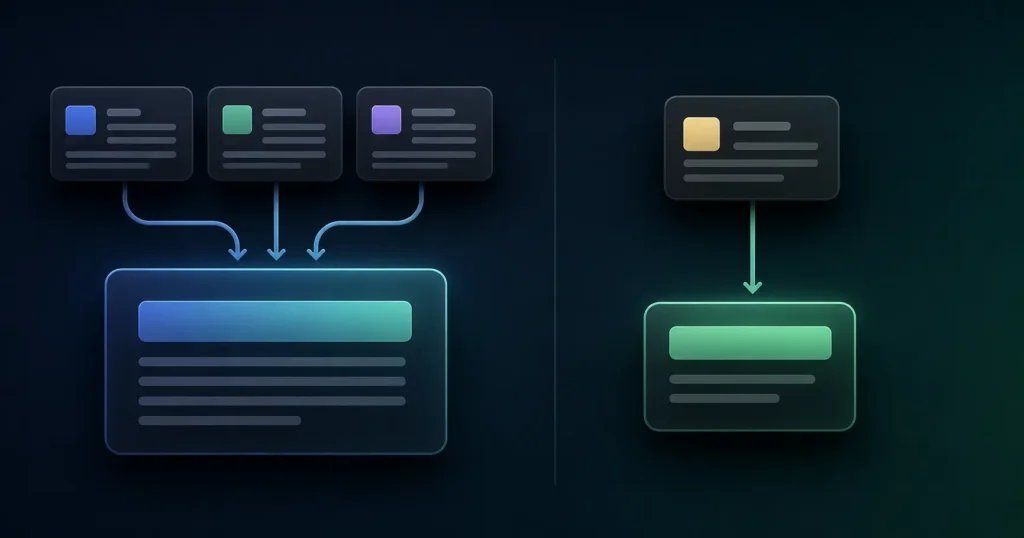
AI Overviews and featured snippets both sit at the top of Google’s results, but they are built in opposite ways: a featured snippet lifts one passage from a single ranking page, while an AI Overview generates a summary from many sources at once.
Knowing the difference between AI Overviews and featured snippets tells you exactly how to earn each, because they reward different things.
This guide is for marketers, SEOs, and content teams trying to make sense of the two answer boxes now competing for the top of the page.
The stakes are real. SparkToro zero-click research found fewer than a third of searches now end in a click, and both of these features are part of why, since each answers the question before the user scrolls. At Intelitune, we help brands win a place in both.
What Is the Difference Between AI Overviews and Featured Snippets?
The core difference is extraction versus generation: a featured snippet is a passage Google extracts and displays from one ranking page, while an AI Overview is a new answer a model generates by synthesizing multiple sources. One quotes a single page; the other writes a summary and cites several. That single distinction changes how you earn each.
That difference is not academic; it changes what a winning page looks like. To win a snippet, you need one passage that answers the question so cleanly it can stand alone when Google lifts it out of context.
To appear in an AI Overview, you need to be one of several sources a model considers trustworthy enough to blend into a new answer, which rewards depth and corroboration more than a single tidy paragraph.
The same page can do both, but the mindset for each is distinct: be the best single answer, and be a source worth citing among many.
Both are answer surfaces, but they map to different disciplines. Winning featured snippets is classic answer engine optimization: be the clearest extractable answer on a page that ranks.
Appearing in AI Overviews leans toward generative engine optimization: be one of several corroborated, quotable sources a model trusts enough to weave in. Here is how they compare directly.
| Dimension | Featured Snippet | AI Overview |
| What it is | One passage extracted from a ranking page | An AI-generated summary of many sources |
| Source | A single page | Multiple pages, synthesized |
| How it is made | Google selects an existing passage | A model generates a new answer |
| Links shown | One link to the source page | A cluster of cited source links |
| Position | Position zero, above organic results | At the very top, above snippets |
| How you win it | Be the clearest answer on a ranking page | Be one of several trusted, quotable sources |
Quick verdict: A featured snippet extracts one passage from a single ranking page; an AI Overview generates a summary from many sources and cites several.
Both sit at the top of Google and both rely on being indexed and snippet-eligible, so strong SEO feeds both. Featured snippets reward one clean answer; AI Overviews reward being a trusted, quotable source among several. Optimize for both, not one.
Featured Snippets and AI Overviews, Defined
A featured snippet is an extracted answer; an AI Overview is a generated one. Both aim to answer the query at the top of the page, but they source that answer in fundamentally different ways, which is worth understanding before you optimize for either.
The good news is that the foundation is shared. Both features require your page to be indexed and eligible to appear with a snippet, and marking your content with Schema.org structured data helps engines understand and extract it for both. Get the fundamentals right and you become eligible for each; the differences below decide which one you actually win.
It helps to picture where each sits. When you search a clear question, you might see an AI Overview generating a few paragraphs at the very top, a featured snippet boxed just below it or in its place, and the familiar ten blue links beneath that.
Each is a separate decision Google makes for that query. Understanding them as distinct layers, rather than one evolving box, is what lets you optimize deliberately instead of guessing why you appear in one and not the other.
What Is a Featured Snippet?
A featured snippet is a short passage Google lifts from a top-ranking page and displays in a box above the organic results, often called position zero. It answers the query directly, with a link back to the source page, and Google selects it automatically. You cannot buy or mark your way into one.
Per Google’s featured snippets guide, Google’s systems decide whether a page makes a good featured snippet and elevate it, so your only lever is to be the clearest, best-structured answer on a page that already ranks. A direct answer near the top, a clean list, or a tidy table is what gets lifted into the box.
Featured snippets come in a few recognizable formats, and matching the format to the query helps. Definition and paragraph snippets answer “what is” questions in a sentence or two; list snippets pull steps or rankings from your headings or bullets; table snippets lift structured data.
The practical move is to anticipate the format Google would want for a given query and shape your answer to match it, so your passage is the easiest one to lift cleanly out of the page.
What Is a Google AI Overview?
A Google AI Overview is an AI-generated summary that appears at the very top of the results for some queries, synthesizing information from multiple sources and linking to several of them.
Unlike a snippet, it is not lifted from one page; a model composes it and attaches a cluster of citations. It sits even higher than a featured snippet when it appears.
Per the Google AI features documentation, a page becomes eligible for AI Overviews simply by being indexed and eligible to show with a snippet, with no special AI markup required. Because Gemini powers these overviews, the work of appearing in them overlaps closely with Gemini SEO, which centers on being a source Google’s AI trusts and cites.
AI Overviews also behave differently once they appear. They can address several angles of a topic in one summary and pull different sources for different claims within the same answer. That breadth is why a single page rarely “owns” an AI Overview the way it can own a snippet; instead, your goal is to be reliably included among the sources it draws on.
The upside is that you can be cited in an overview even when a competitor holds the featured snippet for the same query, so the two are worth pursuing in parallel.
Can Both Appear on the Same Search?
Yes. AI Overviews and featured snippets can appear on the same search, with the AI Overview typically at the very top and a featured snippet or other features below it. They are separate surfaces, so appearing in one does not guarantee the other, though the same strong page can win both. Google decides feature by feature what to show for each query.
This coexistence is why you should not choose between them. A page structured to win a featured snippet, with a direct answer, clean formatting, and sourced facts, is also the kind of page an AI Overview draws on, and both sit alongside the other answer engines your audience uses, from Perplexity SEO surfaces to assistants where Claude SEO applies. The top of search is now a stack of answers, not a single box.
A quick example makes the coexistence concrete. Search a question like “how does answer engine optimization work,” and Google may show an AI Overview summarizing several guides at the top, then a featured snippet lifting one crisp definition from a single ranking page, then the organic results.
A brand could appear in the overview, own the snippet, both, or neither, and each of those is a separate outcome worth tracking. Treating them as one combined top-of-page goal, rather than optimizing for a single feature, is what keeps you present as Google reshuffles what it shows.
How to Optimize for AI Overviews and Featured Snippets
Optimize for both by building one strong, well-structured page and then tuning it to be both extractable and citable.
Lead with a direct answer to the exact question, use clear headings, lists, and tables, and back claims with sources, so a single passage can be lifted into a snippet and the whole page can be trusted by an AI Overview. Ranking first is the shared prerequisite for both.
The two do diverge at the edges. Featured snippets reward one clean, self-contained answer block, while AI Overviews reward corroboration, so original data and clearly attributed facts help you get synthesized in.
The arXiv GEO research paper by Aggarwal and colleagues found that citations, statistics, and quotations raise how often a source appears in generative answers, which is exactly what an AI Overview is.
A short checklist covers most of it. Answer the exact question in the first sentence of the relevant section. Use descriptive headings that match how people phrase the query. Add a clean list or table wherever the answer is naturally structured.
Cite real sources and include specific, verifiable facts. Keep the page genuinely authoritative on its topic rather than thin. Do those things consistently and you make each page eligible for the snippet and useful to the AI Overview at once, without duplicating any of the work.
Want to know whether you win the snippet, the AI Overview, both, or neither? Run a free AI visibility diagnostic to see where you stand at the top of search.
Why the Difference Matters in 2026
The difference matters because the two features send traffic differently, and confusing them leads to the wrong strategy. A featured snippet still offers a clear click to one source, while an AI Overview often satisfies the query across several cited sources, so the click is less certain.
Pew Research Center data shows people click far fewer results once an AI answer appears, which makes being cited in the overview, not just winning the snippet, increasingly important.
For brands, the practical takeaway is to measure presence in both. Winning a featured snippet is a clear, trackable outcome, while appearing in AI Overviews is fuzzier and easy to miss, which is why ChatGPT SEO and answer-focused measurement now sit alongside classic rank tracking. Treating the top of the page as one stack, rather than one box, is what keeps you visible as it keeps changing.
Measurement is where most teams fall behind. Rank trackers were built for blue links, so they often miss whether you hold the featured snippet and rarely tell you whether an AI Overview cites you at all.
The fix is to check the actual results for your priority queries, note which features appear and who is in them, and repeat the key questions inside AI tools to see who gets named. Teams that watch the whole top-of-page stack, not just position, catch shifts while there is still time to respond.
Common Misconceptions
The biggest misconception is that AI Overviews replaced featured snippets. They did not; both still appear, sometimes on the same query, and both draw on the same indexed, snippet-eligible content.
Another myth is that AI Overviews need special markup or a separate SEO strategy, when in reality they run on the same fundamentals that win snippets and rankings.
A subtler error is assuming that winning the featured snippet guarantees a place in the AI Overview. It helps, since both favor clear, authoritative pages, but an AI Overview synthesizes several sources and may cite others instead, so you have to earn each on its own terms.
We see this in our case studies: the pages that win both are the clearest and best-sourced, not the ones that chased a single box. Because the queries and features differ across the industries we serve, the exact mix varies, but the fundamentals hold everywhere.
Frequently Asked Questions
What is the difference between AI Overviews and featured snippets?
A featured snippet is a single passage Google extracts from one ranking page and shows in a box, often called position zero. An AI Overview is an AI-generated summary synthesized from multiple sources, shown at the very top with several cited links. Snippets extract from one page; AI Overviews generate from many. Both sit atop Google results.
Can AI Overviews and featured snippets appear together?
Yes. Both can appear on the same search, with the AI Overview usually at the very top and a featured snippet or other features below it. They are separate surfaces, so winning one does not guarantee the other, though a strong, well-structured page can earn both. Google decides feature by feature what to display for each query.
Did AI Overviews replace featured snippets?
No. AI Overviews did not replace featured snippets; both still appear, sometimes on the same query. AI Overviews sit even higher and synthesize multiple sources, while featured snippets extract one passage from a single ranking page. Both draw on the same indexed, snippet-eligible content, so optimizing for one generally supports the other rather than competing with it.
How do you optimize for AI Overviews and featured snippets?
Rank well, then lead each page with a direct answer, use clear headings, lists, and tables, and back claims with sources. That makes one passage easy to lift into a snippet and the whole page trustworthy enough for an AI Overview to cite. Featured snippets reward one clean answer; AI Overviews reward corroborated, quotable sources across the web.
Do featured snippets and AI Overviews use the same content?
They draw on the same foundation. Both require your page to be indexed and eligible to show with a snippet, and the same preview controls, like nosnippet and max-snippet, govern both. The difference is how they use the content: a snippet lifts one passage from your page, while an AI Overview may synthesize your content with several other sources.
Resources & Further Reading
The following authoritative sources were used to inform and validate this article:
- Google Featured Snippets Guide – Google’s explanation of how featured snippets are automatically selected from ranking pages
- Google AI Features Documentation – Google’s guidance on AI Overview eligibility and the controls that govern it
- Schema.org – the structured data vocabulary that helps engines understand and extract page content
- GEO Research Paper (arXiv) – study showing citations, statistics, and quotations lift visibility in generative answers like AI Overviews
- Pew Research Center – data on falling click rates when an AI answer appears in search results
- SparkToro Zero-Click Research – research showing fewer than a third of searches now end in a click to the open web

Arqam Bashir
Founder & Head of AI SEO
Arqam Bashir is the Founder & Head of AI SEO at Intelitune, helping brands grow visibility across ChatGPT, Google AI Overviews, Gemini, Perplexity, and Search through AI SEO, AEO, GEO, technical SEO, and entity optimization.
- Previous
- Next
- Real client results
What you can expect to gain
- AI Visibility Diagnostic



