




Key Takeaways
A 2026 engine-by-engine playbook for B2B SaaS brands that want ChatGPT, Claude, and Gemini to cite them when software buyers research their category.
- Software buyers now start inside AI assistants, and G2 found half of B2B software buyers begin research with an AI chatbot, so citations decide your shortlist.
- The three engines cite differently: ChatGPT rewards broad web reputation, Claude rewards clean quotable facts, and Gemini rewards Google visibility.
- SaaS brands hold a citation advantage in review-platform presence, original product data, and category-authority content that AI engines trust.
- The biggest mistake is treating AI visibility as one channel instead of tuning for each engine’s distinct retrieval and citation behavior.
- A cross-engine playbook built on reviews, sourced data, and entity clarity turns a SaaS brand from invisible to routinely cited.
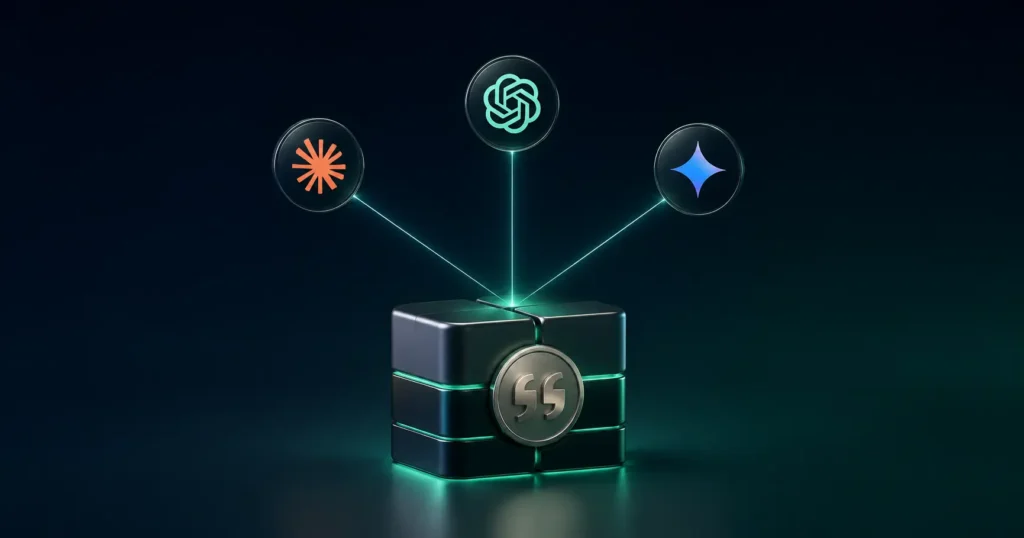
How SaaS Brands Get Cited by ChatGPT, Claude, and Gemini
The software buyer’s journey now starts inside an AI assistant, and how SaaS brands get cited there decides whether they make the shortlist. When a buyer asks ChatGPT for the best project management tools, or Claude to compare CRMs, or Gemini for a category leader, the brands named in the answer win the first look. The ones missing from it never get evaluated.
This playbook is for B2B SaaS marketers, CMOs, and founders in the United States whose buyers research with AI before a demo is ever booked. The stakes are concrete. According to the G2 Answer Economy report, half of B2B software buyers now start their research with AI chatbots, which puts your category squarely in the shift.
The catch most brands miss is that ChatGPT, Claude, and Gemini each retrieve and cite sources differently, so one generic approach leaves gaps. Our team at Intelitune tunes SaaS brands for each engine rather than hoping one tactic covers all three.
Why Do SaaS Brands Need to Get Cited by AI?
SaaS brands need AI citations because the recommendation now happens inside the answer, before any click reaches your site. A buyer who gets a synthesized shortlist from an assistant rarely visits ten vendor sites afterward; they act on the tools the model named. If you are not cited, you are not in the consideration set. This is the core of answer engine optimization for modern software vendors.
The traffic math makes it urgent. The Pew Research Center data shows people click far fewer results once an AI answer appears, so the citation, not the ranking, is increasingly the prize.
For considered purchases like software, where buyers compare several options and involve a whole committee, being one of the vendors an assistant names and sources shapes the entire evaluation before your sales team hears a word.
Quick verdict: Win the citation on all three engines, but tune for each. Build broad web reputation and reviews for ChatGPT, write clean quotable facts for Claude, and win Google visibility plus entity signals for Gemini. SaaS brands that treat AI as one channel lose citations on the engines they ignored.
How SaaS Brands Get Cited: The Three Engines at a Glance
The three engines share fundamentals but differ in where they look and what they trust. Here is how they compare on the factors that decide a SaaS citation, so you can see where your effort should go. Understanding these differences is the heart of practical generative engine optimization.
| Factor | ChatGPT | Claude | Gemini |
| Primary retrieval | Web search plus model memory | Web search, careful grounding | Google Search plus Knowledge Graph |
| Citation style | Linked sources when browsing | Precise, quoted attribution | Cited sources, Google-grounded |
| What earns the citation | Broad web reputation, reviews | Clean, factual, quotable claims | Google ranking plus entity signals |
| Best content for it | Widely referenced category authority | Specific, verifiable statements | Indexed, structured, entity-clear pages |
| Biggest lever for SaaS | Review platforms and mentions | Quotable data and clear facts | Google visibility, structured data |
The pattern is clear: reputation wins ChatGPT, quotable precision wins Claude, and Google strength wins Gemini. A SaaS brand needs all three.
What makes this manageable is how much the work overlaps. The reviews and third-party mentions that feed ChatGPT also strengthen your entity in Google’s eyes for Gemini, and the clean, factual pages you write for Claude are exactly the pages Google rewards too.
You are not running three separate campaigns; you are building one credible, well-sourced presence and then tuning the edges for whichever engine your buyers use most. The table above is a guide to those edges, not three unrelated to-do lists.
How Do You Get Cited by Each Engine?
Getting cited on each engine means matching your effort to how that engine retrieves and trusts sources. The fundamentals of clear, credible content carry across all three, but the emphasis shifts, and the brands that win tune for those shifts. Here is what earns the citation on each.
How Do You Get Cited by ChatGPT?
You get cited by ChatGPT by being a widely referenced, well-reviewed authority in your category. ChatGPT blends training knowledge with web search, and OpenAI’s ChatGPT search attaches linked sources when it browses, so brands referenced consistently across the web get surfaced more often. Strong ChatGPT SEO for SaaS leans on that reputation.
Reviews are your biggest lever here. Presence and strong ratings on G2, Capterra, and TrustRadius feed the third-party signals ChatGPT trusts, far more than any self-published claim. Earn category mentions in respected publications, keep your review profiles current, and become the name that keeps appearing whenever your category comes up.
Consistency across many sources matters more than one big placement, because ChatGPT rewards the brand that is referenced repeatedly rather than the one that shouts loudest in a single spot. Think of it as becoming the default answer to a category question, built from dozens of credible mentions rather than a single campaign.
How Do You Get Cited by Claude?
You get cited by Claude by publishing clean, factual, quotable statements it can attribute precisely. Claude is built for careful, verifiable citation, and Anthropic’s Claude web search tool attaches source URLs, titles, and exact quoted text to claims. That rewards content written as discrete, self-contained facts rather than vague marketing prose.
Precision is your edge, and Claude SEO rewards it directly. State specific facts a model can lift cleanly, such as “Setup takes about two days for most teams” or a concrete integration count, and back them with sources. A page full of quotable, defensible statements gets cited far more than one built on adjectives and hype.
This is where most SaaS marketing works against itself. Product pages tend to lead with aspirational language, then bury the specifics a buyer actually needs, which leaves Claude nothing safe to quote. Rewrite the important claims as plain, sourced facts near the top of the page, and you turn marketing copy that a model skips into reference material it is comfortable citing.
How Do You Get Cited by Gemini?
You get cited by Gemini by winning Google Search visibility and a clean Knowledge Graph entity, because Gemini grounds its answers there. Per Google’s Gemini Google Search grounding documentation, Gemini runs Google searches, synthesizes results, and attaches citations, and it also powers AI Overviews. So your Google strength is your Gemini strength.
Invest where it compounds. Earn rankings for your category terms, ship structured data, and make your entity unmistakable so Google places you correctly. The same Gemini SEO work that lifts your Google presence feeds the grounding layer Gemini uses, which means one investment pays off across search and the assistant at once.
For SaaS specifically, that means the technical fundamentals you may have deprioritized are back in play. Crawlable pages, fast load times, accurate Organization schema, and a correct Knowledge Graph entry all decide whether Gemini can surface you. A category page that ranks on Google for “best help desk software” is exactly the kind of page Gemini reaches for, so winning those terms does double duty as both a traffic play and a citation play.
The SaaS Citation Advantage: Reviews, Data, and Category Authority
SaaS brands hold an unusual advantage in AI citations, because the content that earns them is what good software marketing already produces. AI engines favor evidence, specificity, and third-party validation, and a vendor with strong reviews, original product data, and genuine category authority clears that bar in a way a thin competitor cannot. Your proof is your moat.
The research backs this. The arXiv GEO research paper found that adding citations, statistics, and quotations measurably lifts a page’s visibility in generative engines, and SaaS content is naturally full of exactly those elements.
Publish your own benchmark data, cite your sources, and let real numbers carry the page. That is what convinces a model to name your product in a shortlist.
There is a compounding effect worth planning for. When you publish original research, other sites cite it, which builds the very web reputation ChatGPT rewards, while the data itself is exactly what Claude wants to quote and the resulting rankings are what Gemini grounds against.
A single strong data asset can feed all three engines at once. Most SaaS teams already sit on usage data, benchmarks, and survey results they never publish, which means the raw material for citations is often gathering dust in a spreadsheet rather than working for the brand.
Want to see which engines already cite your SaaS brand and which ignore it? Book a strategy call and we will map your citation gaps across ChatGPT, Claude, and Gemini.
Build the Entity Signals AI Engines Trust
Entity clarity tells every engine who you are, what you do, and which category you compete in, independent of any single page. A model that sees one coherent description of your brand cites you confidently; one that sees conflicting details hedges and names a clearer competitor. For SaaS brands with sprawling product lines, this consistency matters even more.
Make your brand name, product names, and category descriptors identical across your site, your profiles, review platforms, and third-party mentions. Keep your positioning unambiguous, because a vendor that describes itself three different ways teaches the model to trust none of them.
Reinforce that identity with Organization schema and a complete sameAs list, and keep your category clear enough that a model never has to guess whether you are a CRM, a help desk, or a project tool. A quick AI visibility diagnostic shows how each engine currently understands and places your brand, which is where any serious citation effort should start.
Common Mistakes SaaS Brands Make
The most common mistake is treating AI visibility as a single channel and applying one tactic everywhere. Because the three engines retrieve and cite differently, a Google-only, self-published strategy leaves you thin on ChatGPT, unquotable to Claude, and absent from the answers your buyers actually see. Tune for each engine or lose the ones you neglected.
Other errors compound the loss. SaaS brands publish feature-list marketing instead of citable data, let their review profiles go stale, describe themselves inconsistently across platforms so entity resolution fails, and forget that buyers now research across every assistant at once.
The deepest mistake is assuming a great product speaks for itself, then giving the models that recommend software nothing specific or sourced to quote. A quieter but costly error is never measuring whether the assistants actually name you, so teams keep judging success by rankings and demo requests while the citation gap stays invisible.
If you only track clicks, you will not notice that a competitor owns the answer to your category question until the pipeline impact shows up months later.
Your Cross-Engine Citation Playbook for SaaS
Start by unifying your entity signals and shoring up the reviews and Google visibility that feed all three engines. Confirm your G2, Capterra, and TrustRadius profiles are current, verify your site is indexed and ranking for category terms, and make your brand description identical everywhere. That shared foundation is what all three engines read first.
Next, invest in the content that earns citations: original benchmark data, clear and quotable product facts, and category-authority pieces backed by sources. Track outcomes the way we do in our case studies, and tailor the plan to your segment, since buying behavior differs across the industries we serve.
Ninety days of disciplined, engine-aware work moves a SaaS brand from absent to routinely cited exactly where its buyers now start the search.
This playbook does not fit everyone. If your product is brand new with no reviews, no data to share, and no category presence, build that foundation first, because AI engines cannot cite proof you have not created.
For SaaS brands that have earned real traction, though, AI citation is a rare place where genuine evidence beats ad spend, and the vendors that lean into it will own the answers their better-funded competitors never appear in.
Frequently Asked Questions
How do AI engines decide which SaaS tools to cite?
They cite tools that are visible in their retrieval source and backed by credible evidence. ChatGPT leans on broad web reputation and reviews, Claude on clean quotable facts, and Gemini on Google visibility and entity signals. Across all three, third-party validation, original data, and clear structure decide which software brands get named in an answer.
Is getting cited by Gemini different from ChatGPT or Claude?
Yes. Gemini grounds answers in Google Search and the Knowledge Graph, so Google ranking and entity accuracy decide it. ChatGPT relies more on broad web reputation and reviews, and Claude rewards precise, quotable statements it can attribute cleanly. The fundamentals overlap, but each engine weights a different signal, so a smart SaaS strategy tunes for all three.
What content gets SaaS brands cited by AI?
Original benchmark data, current review-platform ratings, clear and quotable product facts, and category-authority content backed by sources. AI engines favor content rich in statistics, citations, and specific claims, which strong SaaS teams already produce. Feature-list marketing with no evidence rarely gets cited, while a well-sourced data page on your category is exactly what an assistant wants to quote.
Do software review sites like G2 affect AI citations?
Yes, significantly. Review platforms like G2, Capterra, and TrustRadius are among the third-party sources AI engines lean on when recommending software, especially ChatGPT. Strong, current profiles and genuine ratings feed the reputation signals that get you named. Neglected or outdated review profiles quietly hand citations to competitors who kept theirs active.
How long does it take a SaaS brand to get cited by AI?
Expect meaningful movement within about 90 days of engine-aware work. Fixing entity signals, review profiles, and Google visibility resolves relatively quickly, while building the web reputation and data depth that ChatGPT and Claude reward compounds over a longer horizon. Pages built around sourced data and clean structure can start earning citations within weeks.
Resources & Further Reading
The following authoritative sources were used to inform and validate this article:
- G2 Answer Economy Report – G2 research that half of B2B software buyers now start research with AI chatbots
- OpenAI ChatGPT Search – OpenAI’s overview of how ChatGPT searches the web and cites sources
- Claude Web Search Tool – Anthropic’s spec for how Claude grounds and cites sources with quoted text
- Gemini Grounding with Google Search – Google’s documentation on how Gemini grounds and cites answers
- GEO Research Paper (arXiv) – study showing citations, statistics, and quotations lift visibility in generative engines
- Pew Research Center – data on falling click rates when an AI answer appears in search results

Arqam Bashir
Founder & Head of AI SEO
Arqam Bashir is the Founder & Head of AI SEO at Intelitune, helping brands grow visibility across ChatGPT, Google AI Overviews, Gemini, Perplexity, and Search through AI SEO, AEO, GEO, technical SEO, and entity optimization.
- Previous
- Next
- Real client results
What you can expect to gain
- AI Visibility Diagnostic