




Key Takeaways
Why Google fails to recognize your brand as a distinct entity, the signals it is missing, and the concrete steps to earn recognition and a knowledge panel.
- Google recognizes a brand as an entity only when it can identify, define, and trust it with confidence.
- The usual causes are thin information, inconsistent facts, no clear entity home, and weak corroboration.
- A missing knowledge panel is the visible symptom of an entity Google is not yet sure about.
- You earn recognition by building a clear entity home, consistent facts, and confirmation from trusted sources.
- Entity recognition underpins AI visibility too, so fixing it helps you across Google and every assistant.
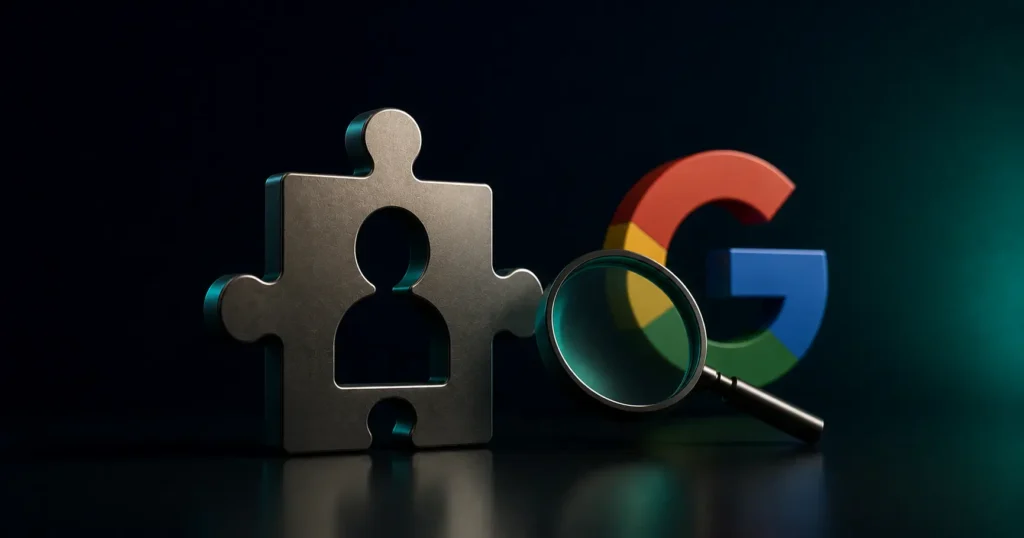
Search your own brand name in Google. If you see a knowledge panel on the right with your logo, description, and links, Google recognizes you as an entity. If you see nothing, or a jumble that mixes you up with something else, Google is not sure who you are, and that uncertainty quietly limits your visibility everywhere.
The good news is that entity recognition is earned through specific, fixable signals, not granted by luck. This guide explains exactly why Google does not yet recognize your brand, and how to change that.
This is written for marketers and founders who keep hearing that they need to be a recognized entity but do not know why Google has not granted it. It covers what entity recognition actually means, the specific reasons Google fails to recognize a brand, and the concrete steps to earn it: building a clear entity home, making your facts consistent, and getting confirmed by the sources Google trusts.
Because entity recognition also underpins how AI answers understand you, fixing it pays off well beyond the knowledge panel. Here is what is missing, and how to supply it.
What does it mean for Google to recognize your brand?
For Google to recognize your brand as an entity means it holds a confident, well-defined understanding of you as a distinct thing, with its own identity, attributes, and relationships, separate from every other thing. Recognition is not the same as being indexed or ranking; it is Google knowing who you are, not just that your pages exist.
Entities, not just websites
Google organizes the world as connected things, not just documents. Its idea of a recognized entity, a singular, well-defined thing it can identify with confidence, is what powers its understanding of brands, people, and concepts. A website is a set of pages; an entity is a known thing those pages describe.
The distinction matters because Google increasingly answers, recommends, and displays based on entities it understands, so being a recognized entity is what lets you show up as a known brand rather than an anonymous set of URLs.
The knowledge panel is the visible sign
The clearest signal of recognition is the knowledge panel. When Google shows a knowledge panel for your brand, it is publicly confirming that it recognizes you as an entity it can describe with confidence.
No panel does not always mean zero recognition, but it usually means Google is not yet certain enough about you to present a confident summary. The panel is the visible tip of the entity; if it is missing, the underlying recognition is probably weak, and that is what you are really fixing.
Quick verdict: Google recognizes your brand as an entity when it can identify you as a distinct thing, define your attributes, and trust the information about you. A missing knowledge panel usually signals that recognition is weak.
You earn it by giving Google a clear entity home, keeping your facts consistent everywhere, and getting confirmed by trusted third-party sources. Do that, and Google moves from unsure about you to confident enough to recognize and display you.
Why doesn’t Google recognize your brand?
Google fails to recognize a brand for a handful of specific reasons: it cannot find a clear, authoritative source of who you are, your information is inconsistent across the web, no trusted sources corroborate you, or your name collides with something else. Almost every recognition gap traces to one of these.
Thin or inconsistent information
The most common cause is simply not enough clear, consistent information. When little authoritative content describes your brand, or different sources state different facts about you, Google cannot build a confident picture, and its own entity data needs a coherent, well-defined thing to attach to.
Inconsistency is especially damaging, because conflicting names, descriptions, or details make Google uncertain which version of you is real. A brand described five different ways across the web is harder to recognize than one described the same way everywhere. This trips up more established brands than you would think.
A company can have a strong website and steady traffic yet still fail recognition because its name appears with an LLC here and without it there, its founding year differs between its about page and a directory, or an old description lingers on profiles nobody updated. To Google, those small contradictions add up to a fuzzy entity, and a fuzzy entity is one it will not confidently display.
No corroboration from trusted sources
The second cause is a lack of outside confirmation. Google gains confidence when independent, trusted sources agree about you, so if your brand exists only on its own website with no mentions in the reference databases and reputable sources that feed the knowledge graph, Google has only your word to go on.
It hesitates to recognize an entity that nothing else confirms. Corroboration is what turns your claims about yourself into facts Google is willing to stand behind in a panel.
Want to know why Google and AI don’t recognize your brand? Run a free AI visibility audit and get a clear read on your entity signals, what is missing, and exactly what is blocking recognition.
You have no clear entity home
One specific, common problem deserves its own section: many brands have no clear entity home, a single authoritative page that unambiguously defines who they are. Without it, Google has no anchor to attach an entity to, so recognition never crystallizes.
Your entity home is usually your homepage or a dedicated about page, marked up so machines understand it. Adding Organization schema, including a sameAs property linking to your official profiles, tells Google exactly which entity this page represents and connects it to your presence elsewhere.
This structured, canonical definition is a core part of answer engine optimization, because it hands Google a clean, machine-readable statement of your identity instead of forcing it to infer one. A clear entity home with proper markup is often the single most effective step toward recognition, because it gives Google something definite to anchor to. The sameAs links do quiet but important work here.
By explicitly connecting your entity home to your verified profiles, they tell Google that the company on your site, the account on your social profiles, and the listing in a directory are all the same thing, rather than leaving it to guess. That single act of connecting the dots can resolve confusion that no amount of extra content would fix on its own.
Your information isn’t consistent everywhere
Even with an entity home, inconsistency across the web undermines recognition. If your brand name, description, address, or key facts differ from one source to another, Google cannot be confident which is correct, and uncertainty is the enemy of recognition.
Consistency is unglamorous but decisive. Your exact brand name, your description, your contact details, and your core facts should match across your website, your social profiles, directories, and every place you appear, so Google sees one coherent entity rather than several partial ones.
This is the same consistency that makes you eligible for accurate Perplexity answers and correct recognition across AI, because every system prefers a brand it can pin down. Audit everywhere your brand is described, reconcile the differences to a single source of truth, and you remove the contradictions that keep Google hedging on who you are.
Trusted sources haven’t confirmed you
Recognition often stalls because the sources Google leans on for entity confirmation have not validated you. Google does not just take your word; it looks for independent, structured corroboration, and if that is missing, you stay unconfirmed.
Get into the sources that feed the graph. Presence in structured reference databases like structured entity data repositories, along with credible mentions and, where genuinely warranted, notable coverage, gives Google the independent confirmation it needs to recognize you confidently.
This corroboration is also the heart of generative engine optimization, since both Google and AI assemble their understanding from multiple validating sources. You cannot force your way into every reference source, and you should never fabricate notability, but building genuine, verifiable presence in the places Google trusts is what moves you from unconfirmed to recognized.
How to fix it and get recognized
You fix a recognition gap by giving Google a clear entity home, making your information consistent everywhere, and earning confirmation from trusted sources, in that order. Each step raises Google’s confidence, and together they earn recognition.
Build a clear entity home with schema
Start with the anchor. Create or designate a single authoritative page that defines your brand, and mark it up with Organization schema and sameAs links to your official profiles, so Google has a clean, machine-readable statement of your identity to attach an entity to. This is the foundation everything else reinforces.
Get consistent and corroborated
Then remove ambiguity and add confirmation. Reconcile your name, description, and facts to be identical everywhere, and build genuine presence and mentions across trusted sources, so Google sees one coherent, well-corroborated entity. This is also what earns recognition in assistants like Google Gemini that draw on Google’s understanding.
Earn a place in the graph
Finally, pursue the structured, authoritative sources that feed the Knowledge Graph, from reference databases to credible coverage, so your entity is confirmed by the sources Google trusts most rather than by your own site alone. Recognition here compounds into being clearly cited in ChatGPT and every AI answer, because a brand Google recognizes as a distinct entity is one that AI systems tend to recognize too.
How long does entity recognition take?
Entity recognition takes time and consistency rather than a single action, because Google builds confidence gradually as signals accumulate and corroborate. There is no button to press; there is a threshold of evidence to reach.
New and smaller brands should expect a patient process. Once your entity home, consistency, and corroboration are in place, Google needs time to crawl, connect, and gain confidence, and recognition often appears gradually before a knowledge panel does. Our AI SEO case studies track this arc, where accurate descriptions and mentions build steadily until recognition solidifies.
The timeline varies with how much authoritative information already exists about you and how competitive your name is, so the honest answer is that it depends, but consistent signals reliably get you there. Keep the signals strong and coherent, and recognition follows.
Why this matters for AI, not just Google
Entity recognition is not only a Google concern; it is the foundation of how AI answers understand and recommend brands. The same signals that earn a Google knowledge panel are what let AI assistants identify you confidently, so fixing recognition pays off across every surface at once.
The connection is direct. A brand Google recognizes as a clear entity is one that AI systems, which draw heavily on the same web and structured sources, can also identify and trust, which is why becoming recognized is what makes you the kind of brand recommended by Claude and other assistants.
Weak entity recognition is a shared weakness across Google and AI; strong recognition is a shared strength. That is what makes this work high-leverage: you are not just chasing a knowledge panel, you are building the identity foundation that every search and AI system relies on to know who you are.
This is why treating entity recognition as a checkbox for a nice-looking panel misses the point. The panel is a symptom of recognition, not the goal, and the recognition itself is the asset. Once a brand is clearly understood as an entity, that understanding travels with it into every AI answer, every voice assistant, and every future surface that has to decide who you are before it can mention you.
Getting help earning recognition
You can do this yourself if someone can build a proper entity home, enforce consistency across the web, and pursue corroboration over time. Many teams bring in a partner for speed and because earning a place in the sources Google trusts takes both technical and outreach skill applied patiently.
If you hire, look for a partner that treats entity recognition as a buildable outcome across your content, markup, and corroboration, and that measures results in real recognition and AI visibility rather than vanity metrics. Our work across competitive industry solutions is built on exactly this foundation, and brands that partner with Intelitune move from unrecognized to being understood clearly by both Google and AI.
From unknown to recognized
When Google does not recognize your brand as an entity, it is not a mystery or a snub; it is a signal problem you can solve. Google lacks a clear entity home to anchor to, sees inconsistent information, or has no trusted confirmation of who you are, and each of those has a concrete fix.
Build a clear, marked-up entity home, make your facts consistent everywhere, and earn confirmation from the sources Google trusts, then give it time to take hold. Do that, and you move from a brand Google is unsure about to one it recognizes, describes, and displays with confidence, which is exactly the foundation you need to be understood across every search and AI system.
Frequently Asked Questions
Why doesn’t my brand have a Google knowledge panel?
Usually because Google does not yet recognize you as a confident entity. That happens when there is thin or inconsistent information about you, no clear authoritative source defining who you are, or no corroboration from trusted third parties. The knowledge panel is the visible sign of recognition, so a missing one means the underlying entity signals are too weak for Google to present a confident summary.
How do I get Google to recognize my brand as an entity?
Give Google a clear entity home, marked up with Organization schema and sameAs links, keep your name and facts consistent everywhere, and earn confirmation from trusted sources like structured reference databases and credible mentions. These raise Google’s confidence that you are a distinct, well-defined thing. Recognition builds gradually as those signals accumulate and corroborate each other over time.
What is an entity home and why does it matter?
An entity home is a single authoritative page, usually your homepage or about page, that unambiguously defines your brand, ideally with Organization schema and sameAs links to your profiles. It matters because it gives Google a clean anchor to attach an entity to, instead of forcing it to infer your identity from scattered pages. It is often the single most effective step toward recognition.
How long does it take Google to recognize a brand?
It varies and requires patience. Once your entity home, consistency, and corroboration are in place, Google needs time to crawl, connect, and build confidence, and recognition often appears gradually before a knowledge panel does. The timeline depends on how much authoritative information exists about you and how competitive your name is, but consistent, coherent signals reliably lead to recognition over time.
Does Google entity recognition affect AI search visibility?
Yes, significantly. The same signals that earn Google recognition, a clear entity, consistent facts, and trusted corroboration, are what let AI assistants identify and recommend you confidently, since they draw on the same web and structured sources. Weak recognition hurts you across both Google and AI, while strong recognition helps everywhere, which is why fixing it is such high-leverage work.
Resources & Further Reading
The following authoritative sources were used to inform and validate this article:
- Google introduced the Knowledge Graph and the idea of recognized entities as “things, not strings.”
- Google Knowledge Graph documents how Google represents things as uniquely identifiable entities with facts.
- Google Knowledge Panel Help explains knowledge panels and how Google presents recognized entities.
- Schema.org defines Organization schema and the sameAs property used to declare entity identity.
- Wikidata is an open, structured database of entities that Google uses for corroboration.
- Wikipedia describes the Google Knowledge Graph and the entities and facts it stores.

Arqam Bashir
Founder & Head of AI SEO
Arqam Bashir is the Founder & Head of AI SEO at Intelitune, helping brands grow visibility across ChatGPT, Google AI Overviews, Gemini, Perplexity, and Search through AI SEO, AEO, GEO, technical SEO, and entity optimization.
- Previous
- Next
- Real client results
What you can expect to gain
- AI Visibility Diagnostic