
 ChatGPT SEO
 Perplexity SEO
 Gemini SEO
 Claude SEO
 Microsoft Copilot SEO
 Meta AI SEO




Where your SEO leads actually went, why your reports cannot see it, and the source that now replaces them.
- Most searches end without a click: 68% of US Google searches in 2026, up from 60.45% in 2024.
- AI Overviews cut the top result’s click-through rate by 34.5%.
- About half of B2B software buyers now start their research in an AI chatbot (G2, 2026).
- Ranking no longer places you in the answer: 53% of AI Overview sources are not in the top 10.
- Last-click analytics tag AI-driven visits as direct, so the new source stays invisible.
- The replacement is AI citation and share of voice. Measure those, not just rank and clicks.
You can still pull your rankings. You can still see your traffic chart. You cannot see the buyer who asked ChatGPT for the best provider, read the answer, and never visited your site. That buyer used to be a lead. Now the trail goes cold at your analytics.
If your SEO leads are down and you cannot say what replaced them, the gap is not your rankings. It is that buyer discovery moved into AI answers, where most searches end without a click. AI SEO is how you get named in those answers. The replacement lead source is being cited and recommended there, not ranked.
At a glance: what moved, and what replaced it.
| What used to generate the lead | What changed in 2026 | The signal that replaced it |
|---|---|---|
| A ranked page earning a click | 68% of US searches end without a click | AI citation rate in buyer-question answers |
| Buyers finding you through Google | About half of B2B software buyers start in an AI chatbot | Presence inside ChatGPT, Perplexity, and AI Overviews |
| Rank deciding your visibility | 53% of AI Overview sources are not in the top 10 | Being the extractable, corroborated answer |
| Analytics crediting the source | Last-click tags AI-driven visits as direct | Share of voice tracked across answer engines |
Every figure is sourced in the five sections below.
The click disappeared, not the demand
Demand for what you sell is steady. The click that used to carry it to you is not.
In early 2026, 68.01% of US Google searches ended without a click, up from 60.45% in 2024, per SparkToro’s 2026 study. Ahrefs found the top result’s click-through rate fell 34.5% when an AI Overview is present, across 300,000 keywords.
So a buyer can read your answer, in your words, and never land on your site. That is how AI is taking your traffic while your rankings hold. The lead did not die. The visit did.
Quick verdict: Stop reading a flat traffic chart as flat demand. The demand moved to a surface your analytics does not count. Count citations, not just sessions.
Your buyers now start inside an AI answer
The first stop in a buying journey used to be a search results page. For many buyers, it is now a chatbot.
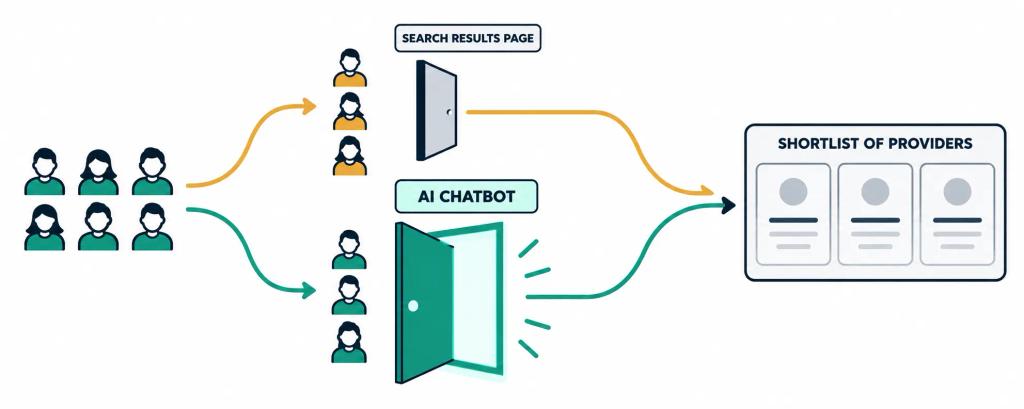
In April 2026, G2 reported that about half of B2B software buyers now start their research in an AI chatbot. So the shortlist can form before a buyer ever sees a blue link.
If you are not named in that first answer, you are not in the running. That is part of why half of software buyers start in ChatGPT matters for your pipeline. The journey starts without you.
Ranking stopped putting you in that answer
You can rank well and still be absent from the answer the buyer reads.
In 2026, 53% of the sources cited in Google’s AI Overviews were not in the organic top 10. That finding comes from 4,706 queries in the arXiv survey on generative engine visibility.
So the page you ranked is not always the page getting named. The AI Overview ranking factors reward a clear, extractable answer over position. Rank still matters for eligibility. It stopped deciding the citation.
Your analytics cannot see the new source
The reason you cannot name what replaced your leads is simple. Your tools were not built to show it.
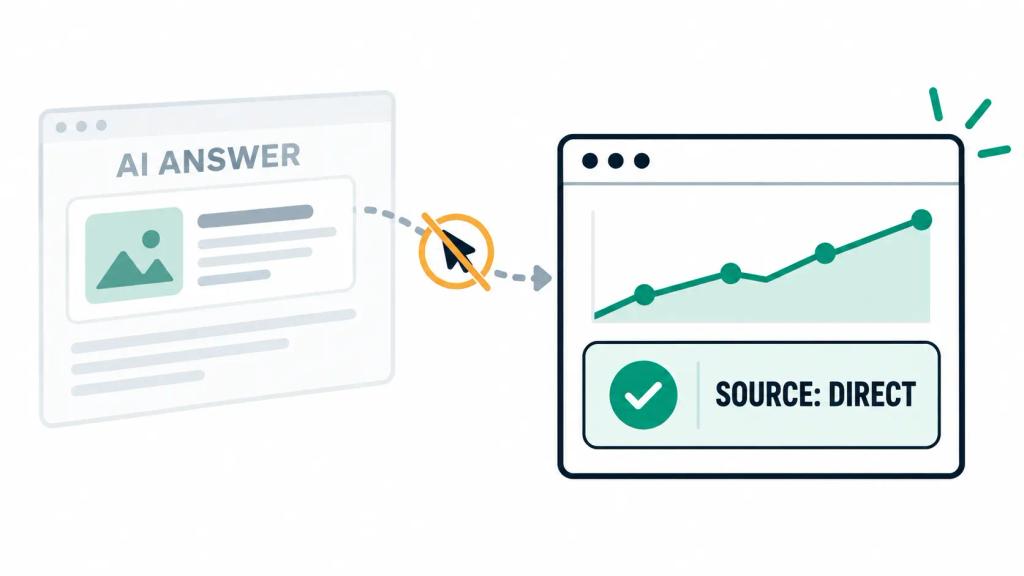
Last-click attribution credits the final step. A buyer who reads an AI answer, then visits you directly or by name, is tagged as direct or branded traffic. Neither GA4 nor Search Console reports when an AI answer named you.
So the AI mention that drove the lead never appears in the report. That is why the honest first move is how to measure AI SEO ROI beyond last click. You are not missing leads. You are missing the metric.
Not sure where your leads are going, or who AI names instead of you? The complimentary AI Visibility Diagnostic shows your standing across the major engines. See where AI names you.
The replacement is being cited, not ranked
The lead your ranked page used to earn now goes to whoever the answer names.
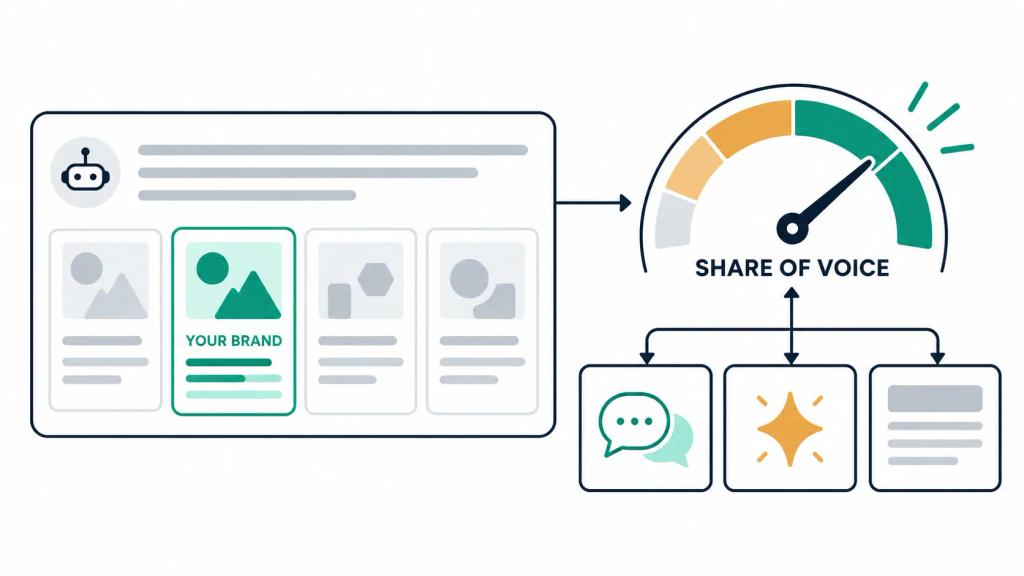
When a buyer asks for the best provider, the brand the model names gets the consideration. That is why competitors get cited while you wait for a click that is not coming.
So the new pipeline source is measurable. Your AI citation rate and your share of voice in category answers are the numbers that replaced the ranked click.
What this does not fix
Being cited is not a guaranteed lead, and no one can promise a date. Citation stays low and volatile, with day-to-day source overlap near 0.34 to 0.42 across engines, per the same arXiv survey. AI-assisted journeys are hard to attribute cleanly, so treat share of voice as a leading signal, not a closed loop. And most of this research uses English queries and anonymous sessions, so your market may read differently.
A 30-day lead-recovery checklist
Use this to find where your leads went before your next pipeline review.
- Pull your branded and direct traffic for the last 12 months, and note any unexplained rise.
- Run your top 15 buyer questions through ChatGPT, Perplexity, and Google AI Overviews, and record who gets named.
- Count how many cited pages rank outside your top 10, as a baseline.
- Ask new leads and customers where they first heard of you, and log AI answers as a source.
- Confirm AI crawlers can reach your key pages in robots.txt and at your CDN.
- Add a clear, two-sentence answer and a real table to each money page.
- Track AI citation rate and category share of voice monthly, beside rank and clicks.
Where Intelitune fits
We find where your leads moved, then get you named in the answers that now form the shortlist. Our AI SEO services are built around AI citation rate and share of voice, not rank alone. One US investment fraud law firm grew its organic form submissions 91% in one quarter. In the same quarter, visitors from ChatGPT took an inquiry action at 20.45% per visit, against about 1.81% for organic search.
Want to see what replaced your leads, and who AI names instead of you? The AI Visibility Diagnostic is a written read across the major engines, back in three business days. It is complimentary, with no sales call. If you only want a guaranteed lead, we are not the right agency.
Turning the gap into pipeline
The leads did not leave the market. They moved to a conversation you are not part of yet, inside the answer your buyer trusts.
Start by naming the gap. Pull your branded traffic, run the buyer questions, and see who gets cited. Then make the shift most of the market is still slow to make. You can read the state of AI search to see how fast it is moving. Get named in the answer, and the lead comes back as a citation.
Frequently Asked Questions
My rankings are stable. Why are my leads down?
Because rankings no longer decide whether buyers reach you. Most searches now end without a click, and about half of B2B software buyers start in an AI chatbot. You can hold page one while the answer your buyer reads names someone else. The lead moved to that answer.
How do I find out where my leads actually went?
Run your top buyer questions through ChatGPT, Perplexity, and Google AI Overviews and record who gets named. Then check your branded and direct traffic for an unexplained rise. Ask new leads where they first heard of you. The pattern shows how much discovery moved into AI answers.
Why doesn’t this show up in Google Analytics?
Analytics credits the last click, not the AI answer that drove it. A buyer who reads an AI answer and then visits you directly is tagged as direct traffic. Neither GA4 nor Search Console reports when an AI answer named you, so the real source stays hidden.
Is this just SEO with a new name?
No. Classic SEO still makes you eligible, but it optimizes for rank and clicks. This optimizes for being cited and recommended inside AI answers, then measures citation rate and share of voice. If your current reports never show how often AI names you, they measure the shrinking half.
Can you guarantee the leads come back?
No, and no honest provider can. AI citation stays low and volatile, and attribution is rarely a closed loop. We guarantee the diagnosis, the method, and the measurement, not a lead number. Anyone promising guaranteed leads from AI search is selling what they cannot control.
Resources & Further Reading
The following authoritative sources were used to inform and validate this article:
- arXiv GEO survey is the source for the 53% citation-overlap and volatility findings.
- G2 reports that about half of B2B software buyers now start their research with AI chatbots.
- SparkToro found only 374 of every 1,000 US Google searches send a click to the open web.
- Ahrefs ran the data study finding AI Overviews lower the top result’s click-through rate by 34.5%.
- Princeton (arXiv) introduced Generative Engine Optimization and measured what boosts AI citations.
- Google Search Central is the official documentation on AI features and how pages appear in them.