
 ChatGPT SEO
 Perplexity SEO
 Gemini SEO
 Claude SEO
 Microsoft Copilot SEO
 Meta AI SEO


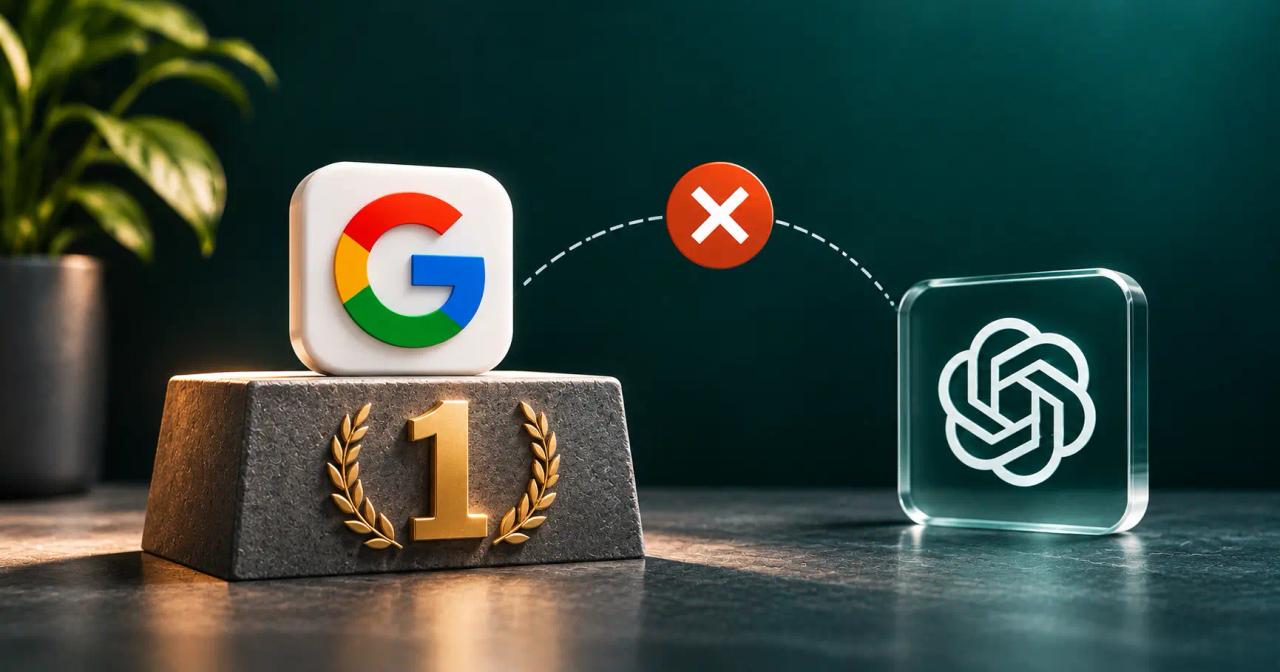
How Google rankings and AI citations came apart in 2026. Why page one no longer gets you named, and the moves that win the citation instead.
- In a 2026 study of 4,706 queries, 53% of AI Overview sources were not in the organic top 10.
- Ranking and citation are only loosely linked now. You can rank first and still be skipped.
- AI Overviews reward extractable answers and clear entities, not organic position.
- You lose twice. About 68% of US searches end without a click, and if you are not cited you get neither the visit nor the mention.
- The gap resets the board. A smaller brand can be cited beside incumbents it could never outrank on Google.
- Measure AI citation rate and share of voice, not just position and clicks.
“When you rank well in Google, you have a good chance to be mentioned.” An SEO wrote that on a practitioner forum in October 2025, and it is the belief most brands still run on. In 2026, the data says it is wrong more than half the time. Your pages can hold page one and still be missing from the answer a buyer actually reads.
This guide shows what changed, why strong rankings stopped carrying over to AI, and the exact checks and fixes that get your pages cited. If you have watched your rankings hold while your traffic and mentions slip, this is the gap you are feeling.
What being cited by AI actually means
Being cited by AI means an answer engine names your page as a source when it responds to a buyer’s question. The goal is not a blue-link position. It is being inside the answer.
That is a different outcome from ranking, and it takes different work. Classic SEO fights for position on a results page. AI SEO works to make your page the one a model quotes when it assembles an answer. The two overlap, because strong search still feeds AI, but they are scored separately and won separately.
Quick verdict: Ranking gets you a link on a page. Citation gets you named in the answer. In 2026 those are two systems, and most brands optimize only the first. Win the citation by being the clearest, best-corroborated, most extractable answer, not by climbing one more position.
Your rankings and your AI citations are now two systems
Rank and citation used to move together. They have come apart, and the data is not subtle.
| Finding | Figure | Sample | Source |
|---|---|---|---|
| AI Overview sources not in the organic top 10 | 53% | 4,706 queries | Kirsten et al., 2026 |
| URL overlap: Google organic vs AI Overviews vs Gemini | 0.11 to 0.18 | 11,500 queries | Grossman et al., 2026 |
| Page overlap over two months: AI Overviews vs organic | 18% vs 45% | 4,706 queries | Kirsten et al., 2026 |
Figures from the arXiv survey “Optimizing Visibility in Generative Engines” (2607.14035), 2026.
An overlap of 0.11 to 0.18 is close to two different lists. More than half the sources named in Google AI Overviews sit outside the top 10 you worked for. Your organic rank now tells you less and less about whether you get named.
My read: most brands are measuring the old game and quietly losing the new one.
How do AI Overviews pick their sources?
AI Overviews pick for extractability and fit, not for rank. The model wants the cleanest answer to the question in front of it.
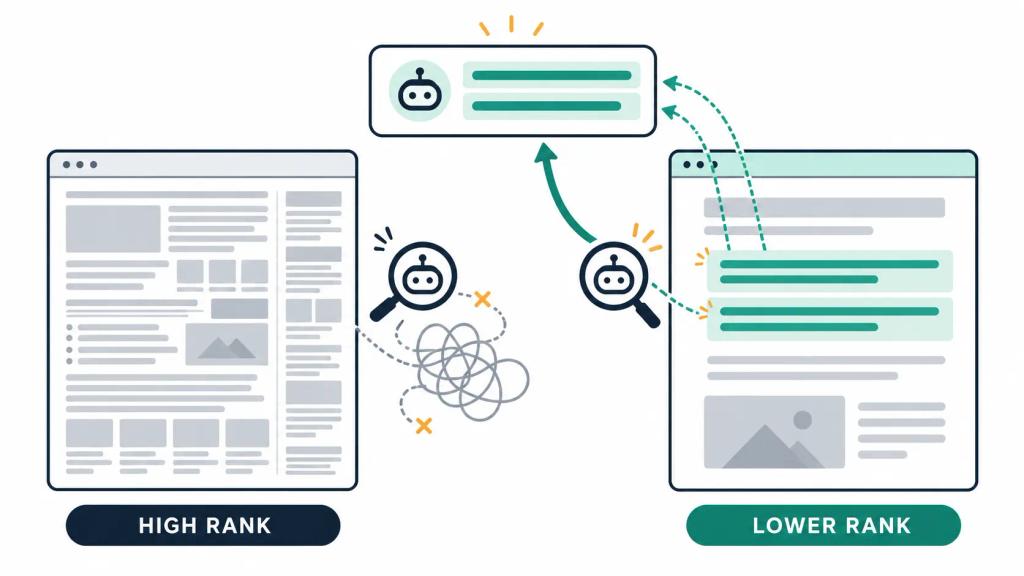
A 2026 analysis of 252,000 trials across six models found the primary drivers of a first citation. They were relevance and position in the model’s context. Keyword stuffing showed null or negative effect. So a page can rank well and still be hard to quote. A page outside the top 10 can be the easiest to lift two clean sentences from. The AI Overview ranking factors that decide this are about structure and clarity, not link volume.
This is why the fix is rarely one more backlink. It is a page a model can quote without hunting.
Being known is not being recommended
Showing up for your own brand name is not the same as being named for your category. The gap is large.
In a 2026 test of 112 startups, ChatGPT recognized the brand 99.4% of the time. It named that brand for a category question only 3.32% of the time. The model knows you exist. It still names a competitor when a buyer asks for the best option. That is a second, deeper problem, and it comes down to how ChatGPT decides what to recommend.
Closing it is entity and corroboration work, not another blog post.
You lose the click and the citation at the same time
While citations move elsewhere, the clicks are shrinking too. Both trends point the same way.
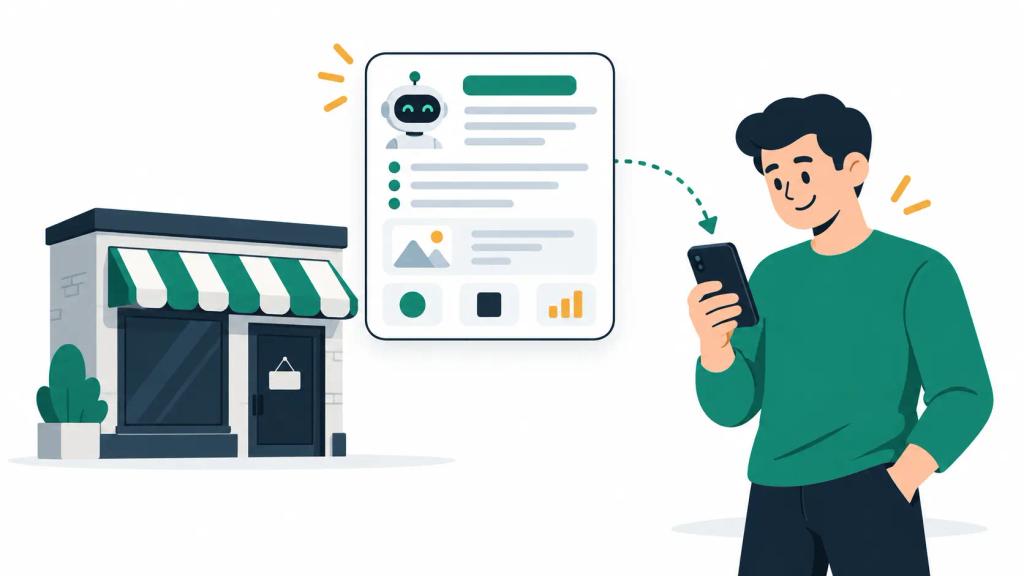
In the first four months of 2026, 68.01% of US Google searches ended without a click, up from 60.45% in 2024, per SparkToro’s 2026 study. Ahrefs found the top-ranking page gets a 34.5% lower click-through rate when an AI Overview is present, across 300,000 keywords (March 2024 vs March 2025). If you want the full picture of how AI is taking your traffic, those two numbers are the start of it.
Rank still, click less, and if you are not cited you get neither the visit nor the mention.
Not sure whether AI cites you or a competitor? The complimentary AI Visibility Diagnostic shows exactly where you stand across the major answer engines.
How to check whether AI cites you
You cannot fix what you have not measured. This takes an afternoon, and you can run it without us.
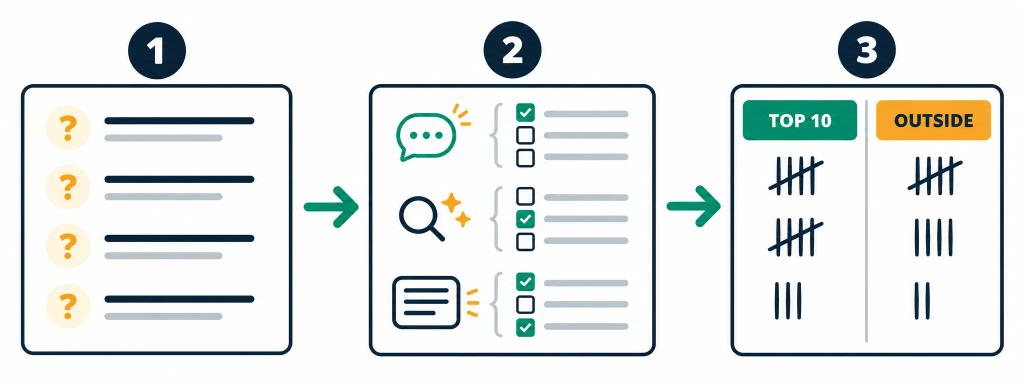
Build a list of 10 to 15 real buying questions. Run each in ChatGPT, Perplexity, and Google AI Overviews. Record whether you are named, and who is named instead. Then count how many of the cited pages rank outside the top 10. That last number is your proof that rank is not the lever. It also tells you why competitors get cited while you rank and wait.
In Search Console, compare impressions against clicks over the last 12 months. A widening gap is AI answering for you.
What ranking-era SEO still gets right
This is not a reason to abandon search. Strong organic coverage still feeds AI answers.
Rank remains the foundation that makes a page eligible to be read at all. The change is that eligibility is no longer the finish line. You now optimize for two outcomes from mostly the same work: the ranked link and the citation. Treat AI citation as an added layer on top of solid SEO, not a replacement for it.
A 30-day citation-recovery checklist
Use this as a fast starting point before you commit to a full program.
- Run 15 buying questions through ChatGPT, Perplexity, and Google AI Overviews, and log who gets named.
- Count how many cited pages rank outside the top 10, as your baseline.
- Confirm AI crawlers can reach you in robots.txt and at your CDN.
- Put a direct, two-sentence answer in the first screen of each money page.
- Add clear question headings and real HTML tables, not screenshots a model cannot read.
- Back key claims with a specific number and a named source.
- Track AI citation rate and share of voice monthly, beside rank.
Where Intelitune fits
We run this measurement for a living, then fix the entity, structure, and corroboration gaps it finds. Our AI SEO services are built around citation and share of voice, not vanity rankings. The work is documented: Bing’s AI answers cited one Australian criminal law firm 704 times in 90 days, and its impressions in Google’s AI features rose from 59 in the quarter before to 13K.
Want to see where AI names you, and where it names a competitor instead? The AI Visibility Diagnostic is a written read across the major answer engines, back in three business days. It is complimentary, with no sales call. If you only want a guaranteed mention, we are not the right agency.
Turning citations into pipeline
The split between ranking and citation is the biggest opening in search in years, and it favors the brands that move first. The ones cited early become the default answer later entrants have to dislodge.
Start with a baseline of how AI describes you today. Fix the content, structure, and entity gaps, then commit to being the clearest, most corroborated answer in your category. Do that and you can win back lost traffic as citations, not just clicks. You stop fighting for a position and start winning the recommendation that closes the deal.
Frequently Asked Questions
If I rank #1, why would AI skip me?
Because AI Overviews select for extractability, not rank. A 2026 study found 53% of cited domains were not in the organic top 10. If your answer is buried, or your entity is unclear, a lower-ranked page that answers cleanly gets quoted instead of you.
Does this mean SEO is dead?
No. Strong organic search still feeds AI answers, so ranking remains the foundation. The change is that ranking alone no longer guarantees a mention. You now optimize for two outcomes, the blue link and the citation, from mostly the same work.
How do I check whether AI cites my site?
Run 10 to 15 real buyer questions through ChatGPT, Perplexity, and Google AI Overviews. Record whether you are named and who is named instead. Then count how many cited pages rank outside the top 10. That single exercise shows your real citation gap in an afternoon.
How is this different from what my SEO agency does?
Most SEO still targets rank and clicks. This targets citation rate and share of voice inside AI answers, which rank does not predict. If your reports show only positions and traffic, they measure the half of the picture that is now shrinking fastest.
Can you guarantee ChatGPT will cite us?
No, and no honest provider can. Citations are low and volatile, with day-to-day source overlap near 0.34 to 0.42. We guarantee the method, the measurement, and a senior team, not a specific mention. Anyone promising a guaranteed citation is selling what they cannot control.
Resources & Further Reading
The following authoritative sources were used to inform and validate this article:
- Search Engine Land covers what AI SEO means and how the discipline is evolving.
- Google Search Central is the official documentation on AI features and how pages appear in them.
- SparkToro found only 374 of every 1,000 US Google searches send a click to the open web.
- Ahrefs ran the data study finding AI Overviews lower the top result’s click-through rate by 34.5%.
- Princeton (arXiv) introduced Generative Engine Optimization and measured what boosts AI citations.
- Wikipedia provides the reference explainer on the large language models that power AI search.